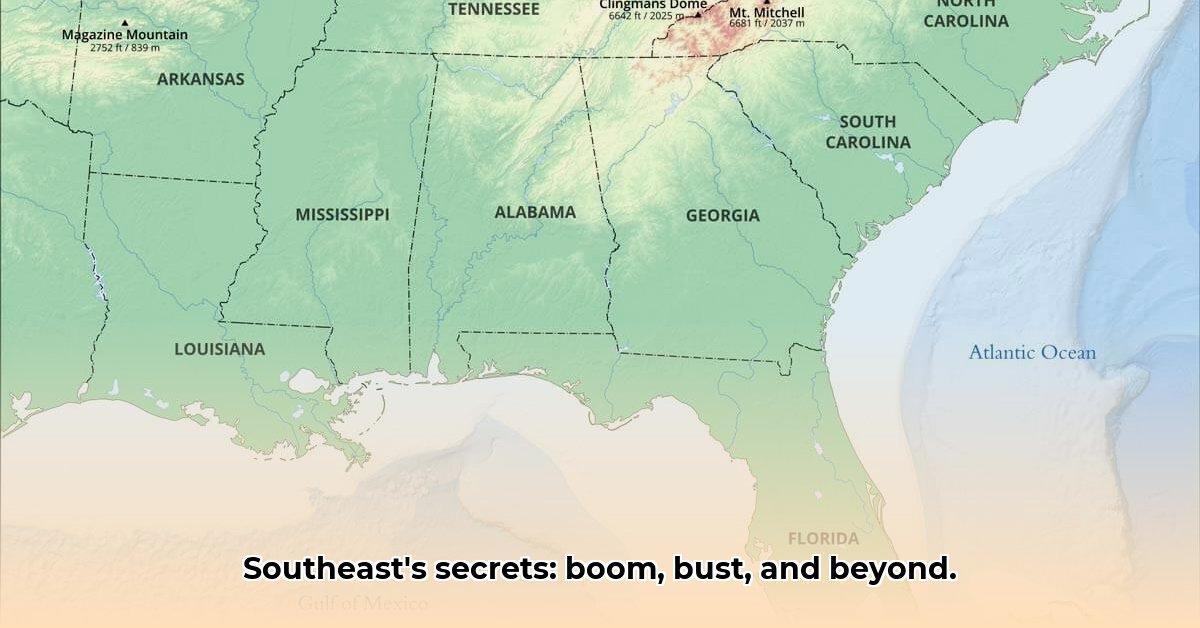
The Southeastern United States is experiencing a period of rapid transformation, a complex interplay of economic growth, environmental challenges, and demographic shifts. This article explores the multifaceted realities of this dynamic region, examining the factors driving population changes, the evolving economic landscape, and the significant environmental vulnerabilities it faces. This analysis aims to provide a balanced perspective on the opportunities and challenges facing the Southeast, offering insights for policymakers, businesses, and individuals interested in the region's future. For a visual representation of the region, see this map of the Southeast.
A Region in Flux: Population Dynamics and Economic Transformations
Since the mid-20th century, the Southeast has witnessed a substantial population influx. Attracted by job opportunities, a warmer climate, and—in some areas—a lower cost of living, millions have migrated to the region, fueling urban expansion and suburban sprawl. However, this growth is far from uniform. While certain areas have experienced remarkable prosperity, others grapple with persistent poverty and limited opportunities. This duality—a vibrant, expanding region alongside pockets of significant hardship—presents a compelling paradox.
The traditional agricultural economy has undergone a significant diversification. While farming remains a vital sector, technology, aerospace, and the tourism industry have emerged as major economic drivers. Cities like Atlanta showcase a burgeoning tech sector, while coastal areas thrive on tourism. Yet, this economic progress has not been equally distributed. Income inequality remains a persistent issue, creating disparities in wealth and access to opportunities. How to ensure shared prosperity across the region presents a critical question demanding thoughtful policies and a commitment to social equity. How can we bridge the gap between booming metropolitan areas and economically depressed rural communities?
Environmental Pressures: A Fragile Ecosystem
The Southeast boasts breathtaking natural beauty, from the Appalachian Mountains to the coastal plains and the unique Everglades ecosystem. However, this beauty is increasingly threatened. Rising sea levels, more intense hurricanes, and prolonged droughts pose significant challenges to both coastal communities and inland environments. The Everglades, a vital wetland, faces the ongoing pressures of development and pollution. What strategies can effectively protect these irreplaceable natural resources for future generations? This question demands a comprehensive and collaborative response.
Climate change is exacerbating existing societal inequalities. Low-lying coastal communities, often home to more vulnerable populations, are disproportionately affected. Addressing this requires substantial investments in protective infrastructure and proactive adaptation strategies. The challenge lies not just in building seawalls, but in developing equitable solutions that guarantee safety and security for all residents. What innovative approaches can effectively protect vulnerable populations while mitigating the impact of climate change?
Charting a Sustainable Course: Collaboration and Strategic Planning
Addressing the complex challenges facing the Southeast demands a collaborative approach. State and local governments, businesses, the federal government, and communities themselves must actively participate. Both short-term solutions and long-term strategic planning are critical, focusing on sustainability and social justice.
The following table outlines potential contributions from various stakeholders:
| Stakeholder | Short-Term Goals | Long-Term Goals |
|---|---|---|
| State Governments | Infrastructure improvements; climate impact preparedness. | Comprehensive climate plans; equitable policies; investment in education & job creation. |
| Businesses/Investors | Support for sustainable tourism; strategic investment. | Transition to renewable energy; adoption of eco-friendly practices; community partnerships. |
| Federal Government | Funding for coastal protection and disaster relief. | Investment in climate research; economic incentives for sustainability; equitable access to resources. |
| Local Communities | Development of community plans; advocacy for local needs. | Sustainable land use promotion; social safety nets; focus on conservation and preservation. |
Risk Assessment and Mitigation: Navigating Uncertainties
Effective responses require a clear understanding of the risks involved. The following matrix highlights key areas of concern:
| Risk Factor | Likelihood | Impact | Mitigation Strategies |
|---|---|---|---|
| Climate Change Impacts | Very High | Very High | Resilient infrastructure; strengthened building codes; improved early warning systems; coastal ecosystem restoration. |
| Economic Inequality | Very High | Very High | Minimum wage increases; access to affordable housing; improved educational opportunities and job training. |
| Biodiversity Loss | High | High | Expansion of protected areas; invasive species control; sustainable land management. |
| Workforce Shortages | Moderate | Moderate | Investment in education and worker training; infrastructure improvements; enhanced quality of life. |
The future of the Southeastern US depends on proactive measures, balancing economic progress, environmental stewardship, and social equity. It requires both a broad perspective and focused local action. The ultimate goal is a prosperous and sustainable Southeast for all its citizens. The path ahead is challenging, but the potential rewards are significant. How can we best ensure a just and equitable future for all residents of the Southeast?
Key Takeaways:
- The Southeast faces intertwined challenges of economic inequality and climate change vulnerability.
- Addressing climate change requires simultaneous efforts to reduce inequality.
- Sustainable economic development is crucial for building climate resilience.
- Equitable policies are needed for a just transition to a low-carbon economy.
- Collaboration among governments, businesses, and communities is paramount.